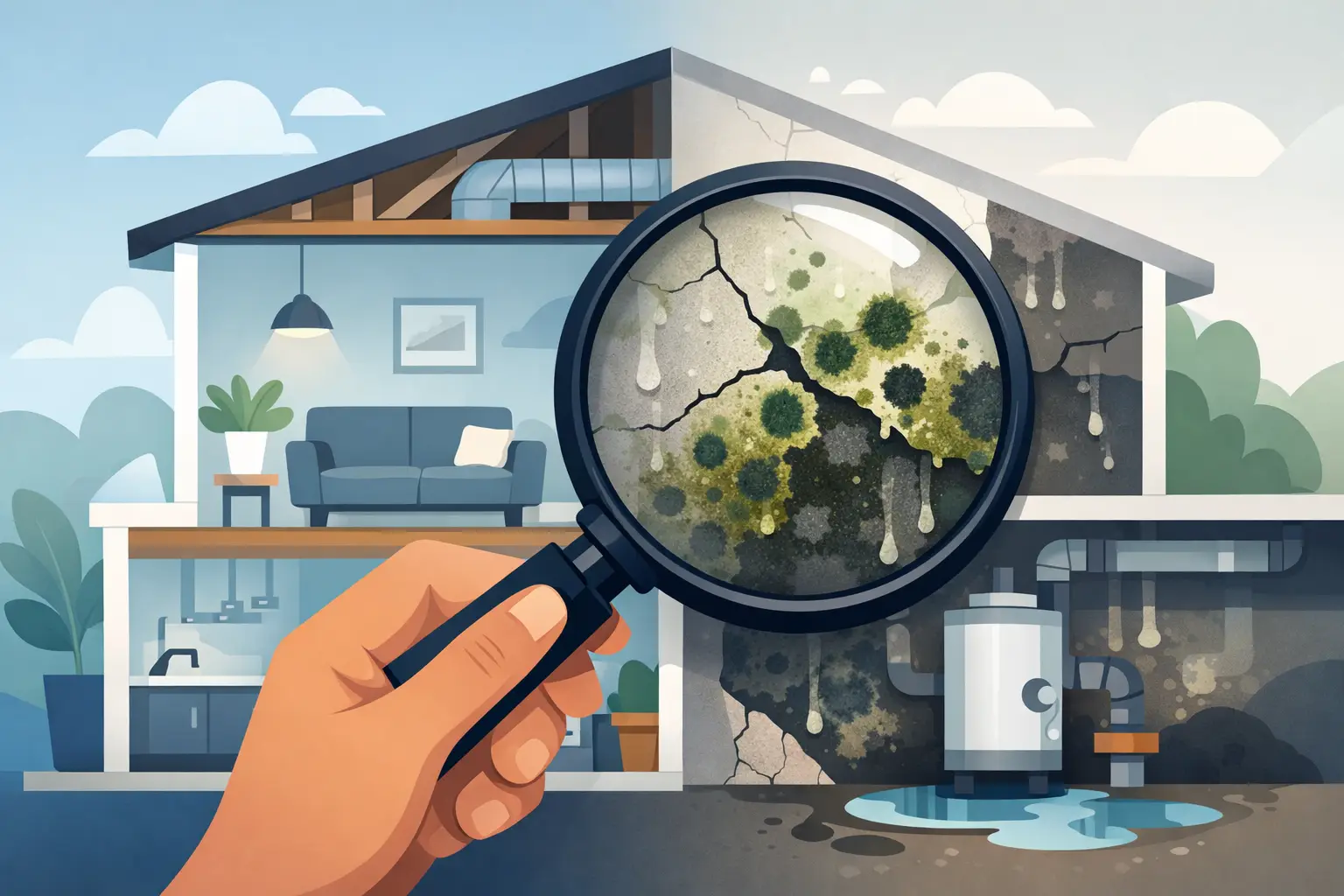
A room can look clean, dry, and recently painted while moisture and mold growth remain concealed behind the wall, under the floor, or above the ceiling. Knowing how to know if mold is hidden starts with looking beyond visible spots. Mold needs moisture and a suitable material to grow on, so the most useful clues are often signs of an unresolved water problem rather than mold itself.
Hidden mold is not something to assume every time a property has an odor or a past leak. It is, however, a condition worth investigating when the building’s history, materials, and current symptoms point to moisture where it should not be. A careful assessment helps separate a minor maintenance issue from a condition that needs a defined remediation plan.
Start With the Moisture Story
Mold growth does not occur without water or prolonged elevated moisture. For that reason, the first question is not always, “Do I see mold?” It is, “Where has water entered, condensed, or remained trapped?”
Think through the property’s recent and long-term history. A roof leak, plumbing failure, overflowing fixture, foundation moisture issue, HVAC condensate problem, window leak, or storm-related water intrusion can create concealed conditions even after surfaces appear dry. In Texas, high outdoor humidity and air-conditioning systems can also contribute to condensation when building materials, ductwork, insulation, or equipment are not performing as intended.
The timing matters. A small plumbing leak that was repaired quickly and thoroughly dried may not have created mold growth. A slow leak inside a wall cavity, on the other hand, can continue for months with little visible evidence. Repeated wetting is particularly significant because materials such as drywall, paper-faced insulation, wood framing, carpet backing, and cabinetry can retain moisture out of view.
Signs That May Indicate Hidden Mold
No single clue proves there is hidden mold. The concern increases when multiple observations align with a known or suspected moisture source.
Persistent Musty Odors
A musty or earthy odor that returns after cleaning, airing out a room, or using fragrance products may indicate microbial growth or moisture-affected materials. Odors are often strongest in closets, under sinks, near HVAC supply or return areas, around bathrooms, or after the home has been closed for several hours.
Odor alone cannot identify the type, amount, or exact location of mold. It can also come from damp materials, drains, crawlspaces, stored belongings, or HVAC components. Still, a persistent odor is a useful reason to investigate the building conditions behind it rather than simply masking it.
Changes to Walls, Ceilings, Floors, or Cabinets
Water can leave subtle physical evidence before obvious mold becomes visible. Watch for paint that bubbles or peels, drywall that feels soft, warped baseboards, staining, cracked caulk, swollen cabinetry, loose flooring, or a ceiling area that sags slightly. These conditions may be old, active, or intermittent, which is why an inspection should consider both the appearance of the material and its moisture condition.
Flooring can conceal problems especially well. A dishwasher leak, refrigerator line leak, slab-related moisture condition, or bathroom overflow may affect material beneath vinyl, laminate, carpet, or wood flooring. By the time staining appears at an edge, the affected area may extend farther underneath.
Recurring Condensation and High Indoor Humidity
Condensation on windows, supply registers, pipes, or interior surfaces is not automatically a mold issue, but it shows that moisture is reaching a cool surface. If it happens repeatedly, the underlying cause may be high indoor humidity, inadequate ventilation, air leakage, poor insulation, or an HVAC performance issue.
Relative humidity is only one part of the picture. A qualified assessment may evaluate temperature, humidity, dew point, surface conditions, and air movement to determine whether condensation is likely. This type of psychrometric analysis helps identify why a problem is occurring instead of treating the visible symptom alone.
Affected Areas Near Water and Air Systems
Certain locations deserve closer attention because they commonly experience concealed moisture. These include bathrooms, kitchens, laundry rooms, utility closets, attics, crawlspaces, exterior wall areas below windows, and spaces around HVAC equipment or ductwork.
In a commercial property, similar concerns may occur above suspended ceilings, below rooftop units, around plumbing chases, in mechanical rooms, and behind finishes near exterior walls. Property managers and building owners should also take reports of recurring odors, staining, or water intrusion seriously, particularly when they affect the same area after rain or HVAC operation.
How Professionals Look for Hidden Mold
A professional mold assessment is not simply a walkthrough looking for dark spots. It is a systematic investigation of moisture, building materials, visible conditions, and available history. The goal is to determine whether conditions support hidden growth, identify the likely source, and define the appropriate next steps.
Visual Inspection and Building History
The assessment typically begins with an interview and visual inspection. Information about leaks, repairs, odors, prior remediation, HVAC issues, flooding, renovation work, and insurance claims can shape the investigation. A concealed problem is often easier to locate when the moisture timeline is clear.
Inspectors may examine accessible areas behind appliances, beneath sinks, inside cabinets, around HVAC equipment, in attics, and along exterior walls. They also look for construction details that can allow water intrusion or restrict drying.
Moisture Mapping and Thermal Imaging
Moisture meters can compare suspect materials with known dry areas and help map the extent of elevated moisture. Different meter types are used depending on whether the material is drywall, wood, concrete, or another substrate. Readings must be interpreted carefully because dense materials, metal, salts, and other conditions can affect results.
Thermal imaging can help identify temperature differences that may be associated with moisture, missing insulation, air leakage, or building-system issues. It does not see mold through walls, and a cool area is not proof of water damage. Used alongside moisture measurements and inspection findings, however, it can help direct attention to areas that warrant further evaluation.
Strategic Air and Surface Sampling
Mold testing can be useful, but it is not a substitute for an inspection. Air samples may help compare indoor conditions with outdoor background conditions or evaluate a specific concern when visible growth is not accessible. Surface samples may help document suspected growth or identify material collected from a particular location.
Testing has limits. Mold concentrations can vary with weather, HVAC operation, occupancy, and sampling conditions. A normal air sample does not guarantee that no hidden mold exists inside a sealed wall cavity, while an elevated result does not by itself identify the source. Laboratory-supported results are most valuable when interpreted with moisture findings, visual observations, and building history.
When Opening Materials May Be Appropriate
Sometimes the evidence supports a limited exploratory opening. This might involve removing a small section of drywall, accessing a plumbing chase, lifting a portion of flooring, or examining an area above a ceiling. The decision should be based on documented moisture, damage patterns, odor location, or other objective indicators.
Opening materials has trade-offs. It can provide direct answers, but it may disturb contaminated materials if they are present and can create repair costs. For that reason, the scope should be thoughtful and controlled. If mold growth is confirmed or likely to be more than a small isolated area, a written remediation protocol can define containment, removal methods, cleaning expectations, and clearance criteria before work begins.
Avoid Common Shortcuts
Painting over stains, applying odor products, or running a dehumidifier without identifying the source may make a room seem improved while the underlying condition continues. Bleach and household cleaners also do not resolve moisture inside wall cavities or beneath flooring.
Home mold kits have a similar limitation. Mold spores are naturally present in normal environments, and a consumer result rarely explains whether a building has an active hidden source, how extensive it is, or what materials require attention. The most useful answer comes from connecting evidence to the building science of the property.
If remediation has already occurred, do not rely only on a clean appearance. Independent post-remediation verification can evaluate whether the work area was properly addressed, whether moisture sources were corrected, and whether the project meets the documented remediation criteria. This is particularly valuable for property transactions, insurance documentation, commercial facilities, and projects involving multiple contractors.
How to Know If Mold Is Hidden Without Guessing
If a property has a recurring odor, unexplained staining, repeated condensation, a history of water intrusion, or material changes near a moisture source, document what you observe. Note when it occurs, whether weather or HVAC operation affects it, and what repairs have already been made. Avoid disturbing suspect materials unnecessarily until the area can be evaluated.
An independent assessment provides a practical path forward because the evaluator is focused on identifying conditions and recommending the appropriate scope, not selling removal work. Hurtler Environmental uses objective inspection methods, moisture investigation, and laboratory-supported testing when appropriate to help Texas property owners understand what is present, what likely caused it, and what should happen next.
The most helpful next step is rarely guessing what may be behind a wall. It is finding the moisture story, documenting the evidence, and addressing the condition in a way that protects both the property and the people responsible for it.