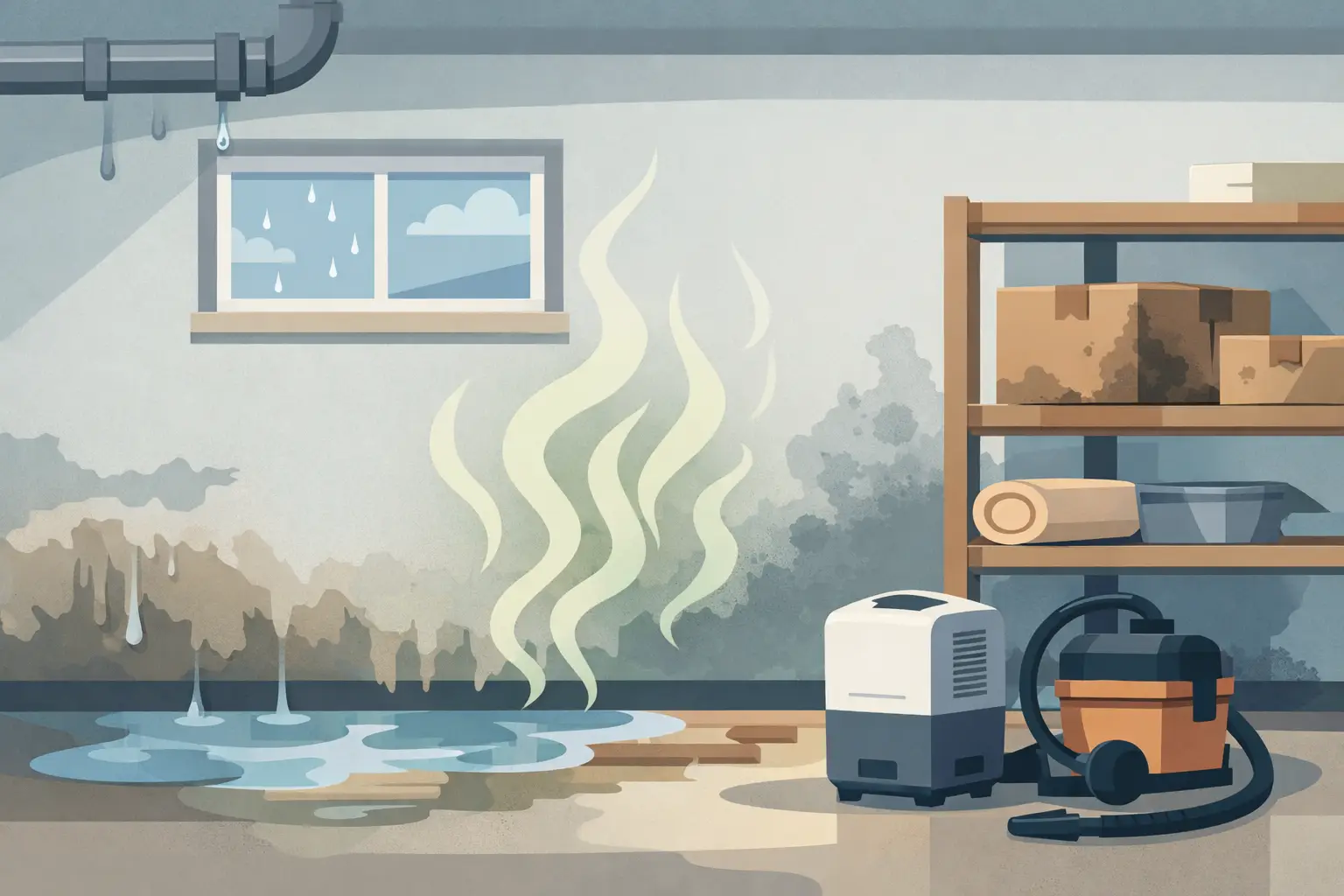
A musty smell after water damage is not simply an inconvenience to cover with fragrance or fresh air. It is often a clue that building materials remain damp, that moisture has migrated beyond the visible water event, or that microbial growth has developed in a concealed area. The odor itself does not identify the exact cause or extent of a problem, but it is a reason to investigate rather than assume the property is dry.
In Texas, moisture concerns can become more complicated after a plumbing leak, roof leak, appliance failure, flood, or HVAC issue. Warm temperatures and humid outdoor conditions can slow drying in wall cavities, under flooring, inside cabinets, and around insulation. A surface may look clean and dry while conditions behind it tell a different story.
What Causes a Musty Smell After Water Damage?
Musty odors are commonly associated with microbial volatile organic compounds, or MVOCs. These are gases that may be released as mold and other microorganisms grow or interact with damp organic materials such as drywall paper, wood framing, carpet backing, dust, and insulation. The odor can be earthy, stale, damp, or similar to a wet basement.
However, mold is not the only possible source. Wet carpet padding, damp wood products, accumulated debris in an HVAC system, stagnant water in a drain pan, and materials that were not thoroughly cleaned after a water event can also create persistent odors. This is why odor alone should not be treated as proof of a particular condition. It is an indicator that should be evaluated alongside the building's moisture history, visible conditions, material moisture content, and, when appropriate, laboratory-supported sampling.
The timing of the odor can be useful. An odor that began immediately after a water loss may point to materials that were not dried quickly enough. An odor that appears weeks or months later can suggest a slow leak, elevated humidity, or moisture trapped beneath finished surfaces. Odors that become stronger when the air conditioner runs may warrant a closer look at condensate management, ductwork, filtration, and areas surrounding HVAC equipment.
Why Dry-Looking Materials May Still Be a Problem
Water does not always remain where it first appears. A supply-line leak beneath a sink may wet the cabinet base, adjacent drywall, flooring, and wall cavity. Water from a roof leak can travel along framing members before it stains a ceiling. A washing machine overflow can move beneath baseboards and under floating flooring, where evaporation is limited.
Porous materials are especially relevant. Drywall, carpet padding, cellulose-based insulation, particleboard cabinetry, and engineered wood flooring can absorb water and retain it out of sight. If those materials were not dried or removed as appropriate for the category and duration of water exposure, odor and microbial growth may persist even after the visible water is gone.
Drying equipment can be effective, but its success depends on the source being stopped, the affected materials being identified, and drying conditions being properly managed. Opening windows is not always enough, particularly during humid weather. A dehumidifier may reduce room humidity while leaving a wet wall cavity unaddressed. The correct response depends on the materials involved, how long they were wet, the type of water, and whether deterioration or visible growth is present.
How to Respond Without Masking the Evidence
The first priority is to make sure the moisture source has been corrected. Repairing a leak, addressing roof intrusion, clearing a condensate drain issue, or correcting an exterior drainage problem is essential. Cleaning or deodorizing before the source is controlled may temporarily improve the smell, but it does not resolve the condition that created it.
Avoid relying on scented sprays, ozone devices, or heavy fragrances as a solution. These approaches can obscure an odor and make it harder to determine whether conditions are improving. Some products may also introduce additional indoor air quality concerns. If the smell is mild and tied to a very small, recently wet area that was promptly dried, monitoring may be reasonable. If it persists, returns after cleaning, or occurs with staining, bubbling paint, warped flooring, or visible mold-like growth, further evaluation is prudent.
Document what you know before repairs or demolition change the evidence. Take photographs of stains, damaged finishes, wet materials, and the apparent source. Record the date of the water event, when the odor began, repairs performed, drying equipment used, and any areas where the smell is strongest. This information can be valuable for an insurance claim, contractor coordination, property management records, or a future real estate transaction.
Investigating Hidden Moisture and Mold Conditions
A professional mold assessment is designed to answer practical questions: Where did the water come from? Is moisture still present? Are there conditions favorable for mold growth? Which materials may be affected? What should be corrected or remediated?
A qualified assessment may include a detailed visual inspection, moisture mapping, thermal imaging, and psychrometric measurements. Moisture meters can help identify elevated moisture in building materials, while thermal imaging may reveal temperature differences consistent with evaporation or potential moisture anomalies. Neither tool independently proves mold growth, but together with direct observation and building history, they help guide a more focused investigation.
When conditions warrant it, targeted air or surface sampling may provide additional information. Sampling is not a substitute for a thorough inspection. A normal air sample does not necessarily rule out concealed growth in a wall cavity, and a positive sample must be interpreted in context. The location of samples, outdoor conditions, visible materials, moisture findings, and the property's history all matter.
In some cases, limited exploratory openings may be appropriate to evaluate concealed areas. This should be approached carefully and with a defined purpose. Random demolition can spread dust, remove evidence, and increase repair costs without clearly identifying the extent of the issue. An assessment can help determine where an opening is most likely to provide useful information.
When the Odor Calls for a More Formal Evaluation
A musty smell deserves timely attention when it follows a significant water loss, remains after drying efforts, or returns during humid conditions. It is also appropriate to seek an independent evaluation when there is a dispute about whether a loss was properly dried, when a contractor discovers suspicious conditions during renovation, or when a property is being prepared for sale or lease.
Commercial properties and multifamily buildings may require particular care because water can affect multiple units, shared plumbing systems, common wall cavities, or HVAC components. Property managers and owners benefit from documentation that clearly distinguishes observed conditions from assumptions and outlines practical next steps.
An independent Mold Assessment Consultant does not perform mold removal. That separation matters. The assessment process can remain focused on identifying conditions, defining the appropriate scope of work, and documenting findings rather than selling a remediation project. If remediation is needed, a written protocol can establish containment, removal methods, cleaning expectations, and clearance criteria that help all parties work from the same standard.
Do Not Skip Verification After Remediation
Odor reduction alone is not evidence that remediation has been completed successfully. A property may smell better because contaminated materials were covered, fragrances were used, or ventilation changed temporarily. The underlying moisture condition must be corrected, and affected areas must be appropriately remediated.
Post-Remediation Verification, often called PRV, is an independent evaluation performed after remediation work is complete. It can include a visual review of the work area, confirmation that the moisture source has been addressed, assessment of cleaning and containment practices, and sampling when appropriate. The objective is to determine whether the project has met the defined remediation goals before reconstruction closes walls or finishes are reinstalled.
For homeowners, insurers, contractors, and property managers, this step can provide a clearer record that the work was evaluated independently. It also gives remediation contractors an objective basis for demonstrating that the project was completed in accordance with the established scope.
A persistent odor is useful information from the building. Treat it as a prompt to identify the moisture story behind it, preserve the relevant evidence, and make decisions based on a careful investigation rather than assumptions. Hurtler Environmental provides independent, science-based assessments to help Texas property owners understand what is present and what should happen next.