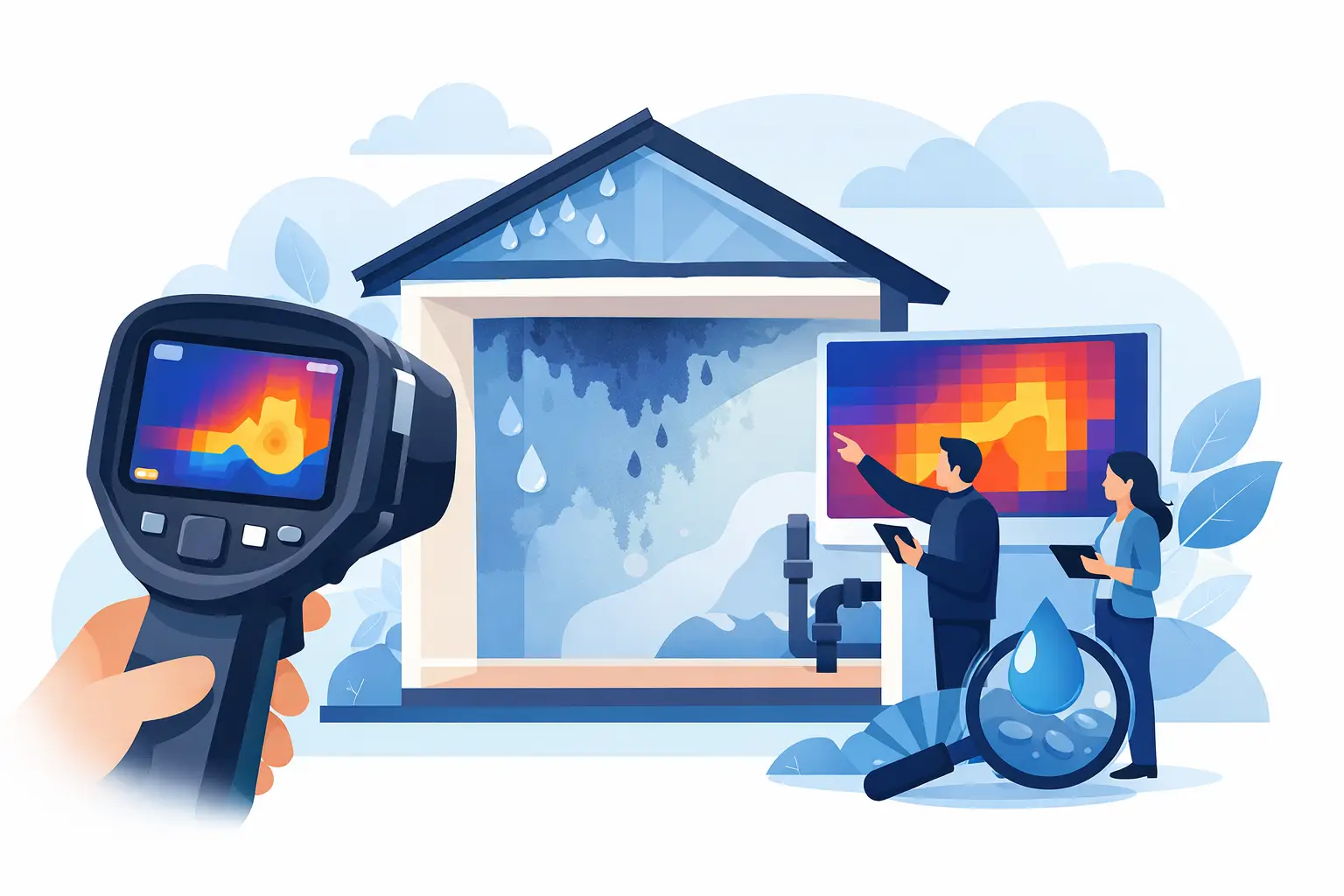
A wall can look completely dry while a slow plumbing leak, roof intrusion, or air-conditioning issue is affecting materials behind the surface. Thermal imaging for moisture detection helps an assessor identify areas that may warrant closer investigation without opening walls unnecessarily. It is a valuable building-science tool, but it is not a camera that can see water or confirm mold on its own.
For Texas property owners, this distinction matters. High outdoor temperatures, strong air-conditioning loads, heavy rain events, and elevated humidity can all create temperature patterns in a building. A qualified assessment separates normal thermal variation from conditions that may point to moisture intrusion, condensation, or hidden damage.
What Thermal Imaging Actually Detects
An infrared camera measures surface temperatures and displays differences as a color image. Depending on the camera palette, cooler areas may appear blue or purple while warmer areas appear yellow, orange, or red. Those colors do not identify a material, a defect, or a moisture condition by themselves. They simply represent relative temperature differences.
Moisture can change the temperature of a surface because wet materials often evaporate water and may cool differently than dry materials. A damp section of drywall beneath a roof leak, for example, may appear cooler than surrounding drywall under the right conditions. Wet insulation, plumbing leaks, and condensation near an HVAC supply register can also create recognizable thermal patterns.
However, many non-moisture conditions can create similar patterns. Missing insulation, air leakage, framing members, electrical components, recent sunlight exposure, and differences in wall construction may all appear as thermal anomalies. That is why an infrared image is an investigative starting point, not a final diagnosis.
How Thermal Imaging for Moisture Detection Is Used
During a mold assessment or moisture investigation, thermal imaging is most useful when it is combined with a visual inspection, moisture mapping, and an understanding of how the building is constructed. An assessor first considers the reported concern and the property history. Was there a roof leak after a storm? Did a supply line fail? Is there a recurring musty odor near an exterior wall or air handler?
The inspection then evaluates likely moisture pathways. These may include roof penetrations, windows, exterior cladding transitions, plumbing fixtures, shower surrounds, appliance connections, HVAC equipment, and foundation-related conditions. Infrared scanning can help identify locations where the observed temperatures differ from nearby surfaces and where follow-up testing is appropriate.
When a suspicious pattern is found, a qualified assessor may use non-invasive moisture meters to compare the area with known dry materials. In some situations, pin-type testing, humidity measurements, psychrometric analysis, or limited investigative openings may be needed to understand the condition accurately. The goal is to document evidence, identify the probable source of moisture, and determine whether materials have been affected.
This process can reduce unnecessary demolition while helping contractors and property owners focus their investigation. It also creates useful documentation for insurance claims, repair planning, real estate transactions, and remediation protocols.
The right conditions matter
Infrared inspections work best when there is enough temperature contrast between one side of a building assembly and the other. In a Texas home, that contrast may be created by air-conditioned indoor air against a hot exterior, by recent rain evaporating from wet materials, or by operating plumbing and HVAC systems.
Timing can affect the results. A roof surface heated by afternoon sun may retain heat long after the sun has moved, making a ceiling or exterior wall difficult to interpret. A recently used shower may create normal temperature changes around plumbing and tile. Conversely, a slow leak can be difficult to detect if the materials have dried at the surface or if there is little temperature difference during the inspection.
For this reason, a single thermal image should always be evaluated in context. Experienced assessors compare suspect areas with surrounding materials, consider the direction of heat flow, and verify conditions with other methods whenever possible.
What an Infrared Camera Cannot Tell You
Thermal imaging is often described as a way to find hidden moisture, but that description needs qualification. The camera does not measure moisture content. It does not see through walls. It does not identify the exact source of a leak, determine how long materials have been wet, or establish whether mold growth is present.
A cool spot on a wall could be moisture, but it could also be an air leak around a window, a gap in insulation, a cold water line, or a framing detail. A warm spot could relate to electrical equipment, sunlight, duct leakage, or heat transfer through a structural component. Interpretation requires training in infrared principles and building science, not just access to a thermal camera.
Likewise, thermal imaging does not replace mold testing when sampling is appropriate. Air or surface sampling may be considered when an assessment requires additional information about fungal conditions, when visible growth needs laboratory support, or when documentation is needed for a specific project. Sampling should be based on the facts of the inspection rather than performed automatically.
Common Areas Where Moisture Clues Appear
In residential and commercial properties, moisture-related thermal anomalies are often found near exterior openings, roofs, wet areas, mechanical systems, and plumbing routes. The pattern and location can provide meaningful clues.
Around windows and exterior doors, an anomaly may relate to flashing deficiencies, failed sealants, air leakage, or rainwater intrusion. On ceilings, patterns may suggest roof leakage, condensation from ductwork, or plumbing from an upper floor. Near showers, tubs, and toilets, moisture may originate from supply lines, drain connections, failed waterproofing, or repeated surface wetting.
HVAC systems deserve close attention in Texas. Condensate drain problems, poorly insulated refrigerant lines, duct sweating, return-air leakage, and high indoor humidity can contribute to moisture conditions. An infrared scan may help locate affected materials, but evaluating relative humidity, dew point, surface temperature, and equipment operation is often necessary to determine whether condensation is occurring.
Why Moisture Investigation Matters for Mold Assessments
Mold requires moisture to grow. Finding and correcting the moisture source is therefore central to a proper mold assessment and remediation plan. Removing visible growth without addressing an active leak, humidity problem, or condensation condition can lead to recurring damage.
A careful investigation looks beyond the visible area. If staining or microbial growth appears at the base of a wall, the relevant question is not only what is visible. The assessment should consider whether moisture traveled within the wall cavity, affected adjacent materials, or originated from a source some distance away.
Thermal imaging can support this broader evaluation by helping define areas for moisture measurements and closer inspection. Used properly, it can make the assessment more targeted and help establish a defensible basis for recommendations. Used alone, it can produce assumptions that lead to missed conditions or unnecessary work.
From Thermal Finding to Practical Next Steps
When thermal and moisture findings indicate a possible building concern, the next step depends on the evidence. A minor, isolated condition may only require repair of the source and drying verification. A larger or long-standing intrusion may require a remediation protocol that defines containment, removal methods, cleaning, drying criteria, and post-remediation verification.
Independent assessment is particularly valuable when the scope of work is uncertain. Because Hurtler Environmental does not perform mold removal, recommendations are based on observed conditions and documented findings rather than on selling remediation services. This helps property owners, contractors, insurers, and managers make decisions from an objective starting point.
After repairs or remediation, verification should address more than appearance. Dryness, remaining affected materials, cleanliness, and the absence of conditions likely to support continued growth all matter. Depending on the project, Post-Remediation Verification may include visual evaluation, moisture testing, thermal imaging, and sampling when appropriate.
If you notice staining, a persistent odor, recurring ceiling discoloration, warped finishes, or unexplained humidity, document when it occurs and where it appears. That information, paired with a methodical assessment, can turn a vague concern into a clear plan for repair and verification.