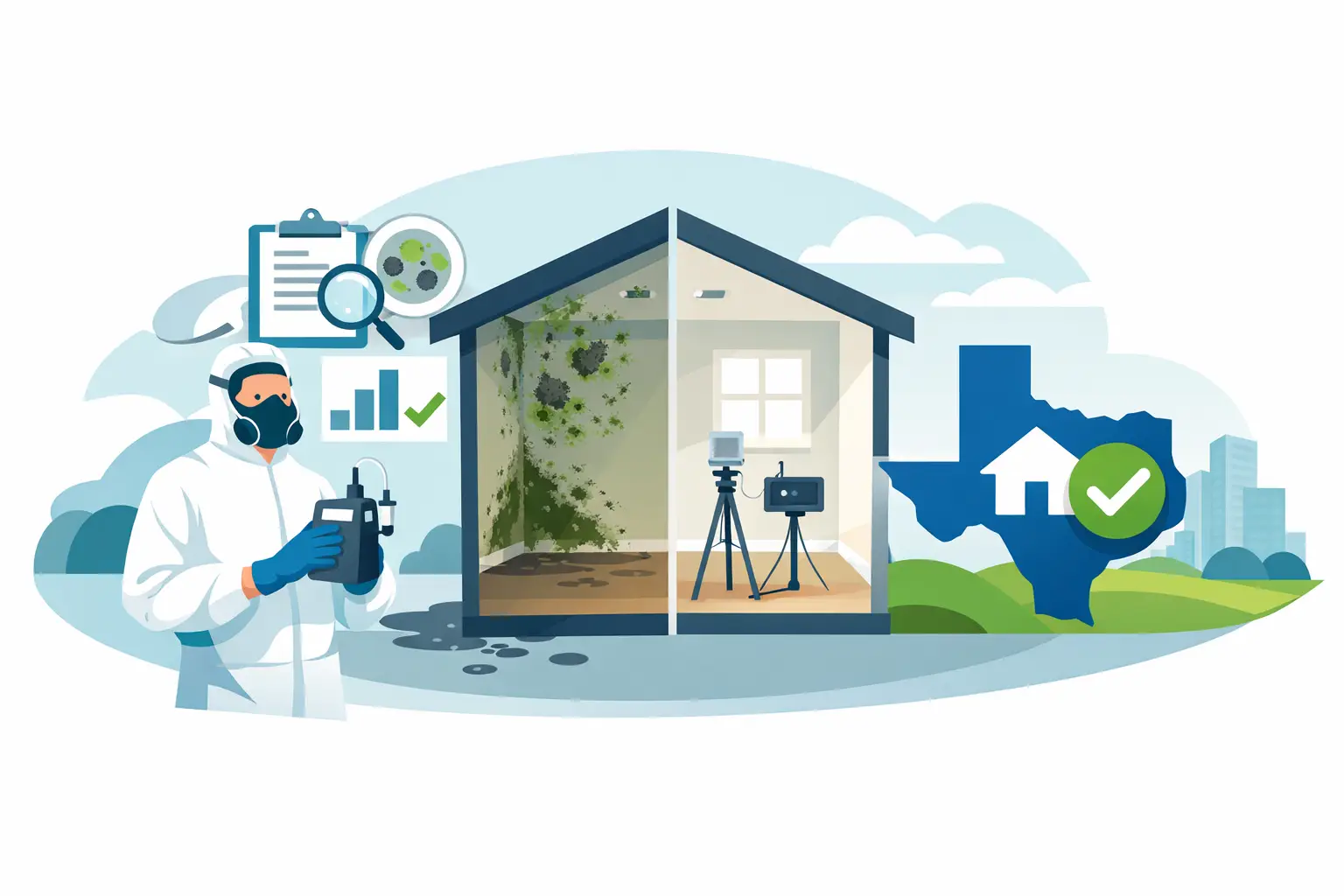
When clients ask, “is PRV required?” the honest answer is: it depends on the scope of work, the property, and whether the project falls under Texas mold regulations. For many regulated mold remediation projects in Texas, post-remediation verification is not simply a nice final step. It is a required independent assessment used to determine whether the work was completed according to the remediation protocol.
For smaller cleaning jobs or limited areas of surface growth, PRV may not be legally required. Even then, an independent verification can be a practical safeguard when the original concern involved significant water damage, concealed mold, an insurance claim, a real estate transaction, or occupants with heightened indoor environmental concerns.
Is PRV Required Under Texas Mold Rules?
Texas regulates certain mold assessment and remediation activities through the Texas Department of Licensing and Regulation. When work meets the definition of a regulated mold remediation project, post-remediation assessment is generally part of the required process.
A regulated project commonly involves mold contamination affecting more than a limited area, or remediation work that requires a formal protocol and licensed professionals. Before remediation begins, a licensed Mold Assessment Consultant may develop a written protocol describing the affected areas, containment requirements, removal methods, cleaning procedures, moisture corrections, and clearance criteria.
After the remediation contractor completes the work, a licensed mold assessor performs the post-remediation assessment. If the project meets the protocol’s clearance requirements and the conditions support successful completion, the assessor can issue documentation associated with the completed project. The specific regulatory obligations should always be confirmed based on the current rules and the facts of the individual project.
The central point is straightforward: on a covered Texas mold remediation project, the contractor should not be the only party deciding whether its own work passed. Independent evaluation is built into the process to protect the property owner and create a defensible record of completion.
What PRV Actually Verifies
Post-remediation verification, often called PRV or clearance, is an assessment of conditions after remediation. It is not just a quick look around the room, and it is not automatically the same thing as an air test.
A proper PRV begins with the remediation protocol. The assessor compares the completed work to the protocol and evaluates whether the conditions that supported mold growth have been addressed. That may include confirming that affected materials were properly removed, remaining surfaces were cleaned, containment was taken down appropriately, and the work area is free of visible dust, debris, and apparent mold growth.
Just as important, the underlying moisture issue must be considered. Mold remediation is not successful if contaminated material is removed but a roof leak, plumbing failure, condensation problem, elevated humidity condition, or wall intrusion remains active. A dry, stable building environment is part of an effective outcome.
Depending on the project, the assessment may include moisture measurements, visual inspection, review of containment and cleaning practices, and laboratory-supported air or surface sampling. Sampling can be useful, but it should answer a specific question rather than serve as a stand-alone pass-or-fail shortcut. There is no single air-sample number that can replace a careful inspection, a review of the protocol, and an understanding of normal conditions at the property.
When PRV May Not Be Legally Required
Not every instance of mold or mildew calls for a formal remediation protocol and PRV. A small, isolated area of surface growth caused by a short-term spill or minor humidity issue may be addressed through appropriate cleaning and moisture control without becoming a regulated remediation project.
For example, a homeowner may find light surface growth on a bathroom ceiling where ventilation has been inadequate. If the area is limited, the material is not extensively damaged, and the moisture source is corrected, formal post-remediation verification may not be legally required. The appropriate response depends on the material involved, the amount of growth, whether contamination may be concealed, and whether the problem has spread beyond the visible area.
That distinction matters because unnecessary testing or paperwork does not benefit a property owner. At the same time, assuming a project is minor without investigating moisture and hidden conditions can lead to incomplete work. A professional mold assessment helps establish the actual scope before remediation decisions are made.
Why Independent PRV Matters Even When It Is Optional
A remediation company may be highly skilled and act in good faith. Still, asking the company that performed the work to be the sole judge of its completion creates an understandable conflict. Independent PRV separates the assessment role from the remediation role.
That separation is especially valuable when there is a disagreement about scope, a claim file requires documentation, or a buyer, lender, tenant, property manager, or insurer needs objective evidence. An independent assessor has no financial interest in selling removal services or extending the remediation project. The focus is on whether the documented conditions meet the established clearance criteria.
Optional PRV is often a wise choice after a significant leak, sewage-related water damage, extensive demolition, HVAC-related contamination, or remediation in sensitive spaces such as bedrooms, healthcare settings, schools, or occupied commercial properties. It may also be appropriate when a musty odor remains after work is supposedly complete.
For property owners, the value is not merely a report. It is the ability to make the next decision based on evidence. If the area passes, there is clearer support for moving forward with repairs and rebuilding. If it does not pass, remaining deficiencies can be identified before new finishes cover the work.
PRV Is Not a Guarantee of Every Indoor Air Quality Outcome
Clearance is a meaningful professional milestone, but it has limits. A PRV evaluates the remediated conditions at a particular time and against the applicable project criteria. It does not guarantee that a property will never experience another leak, humidity problem, odor, or indoor air quality concern.
It also does not diagnose health conditions or establish that a particular environmental condition caused an individual’s symptoms. Indoor environmental concerns can involve many variables, including moisture, ventilation, outdoor conditions, dust, building materials, and occupant activities. A responsible assessment documents observable conditions and provides practical recommendations within the scope of the project.
This is why the remediation protocol matters so much. Without defined work areas and clearance criteria, the final verification can become subjective. A clear protocol provides a common standard for the owner, contractor, insurer, and assessor.
How to Plan for Post-Remediation Verification
The best time to consider PRV is before remediation starts, not after the containment has been removed and repairs have begun. If a project requires a protocol, the protocol should identify the expected clearance process from the outset. The remediation contractor can then price and schedule the work with those requirements in mind.
Before work begins, property owners should confirm who will perform the independent assessment, what areas are included, what conditions must be corrected before clearance, and whether sampling may be appropriate. They should also preserve key documentation, including the assessment report, remediation protocol, contractor records, photographs, moisture findings, and final clearance documentation.
For insurance-related projects, clear documentation can reduce avoidable disputes about what was found, what was removed, and whether the work was completed. For contractors, it provides a defined finish line. For homeowners and property managers, it replaces assumptions with an objective evaluation.
Hurtler Environmental provides independent mold assessments, remediation protocols, and post-remediation verification throughout Texas. Because the firm does not perform mold removal, its recommendations and clearance findings remain focused on the property conditions, the project requirements, and the evidence observed.
If mold remediation is being planned or has already been completed, the most useful question is not only whether PRV is required. Ask whether the project has a clear scope, whether the moisture source has been addressed, and whether an independent professional has confirmed that the work meets the appropriate criteria before the property is put back together.